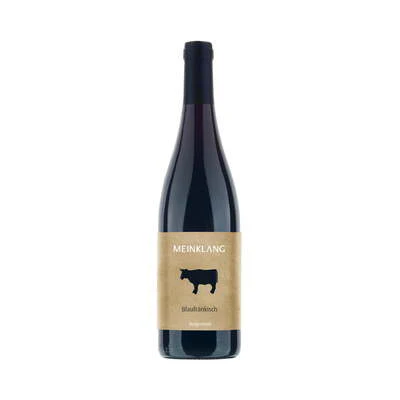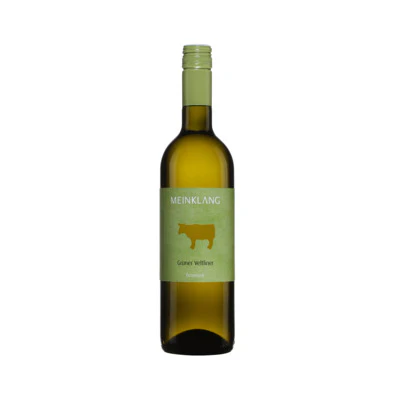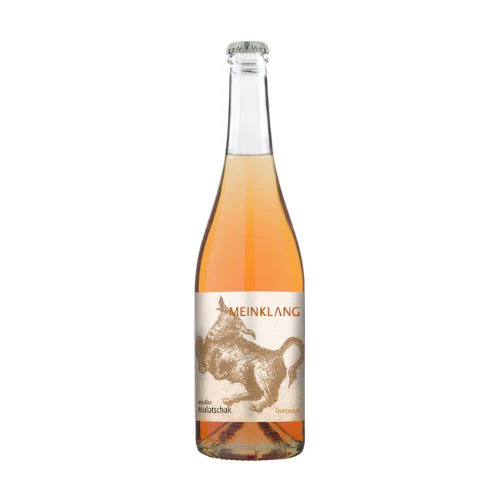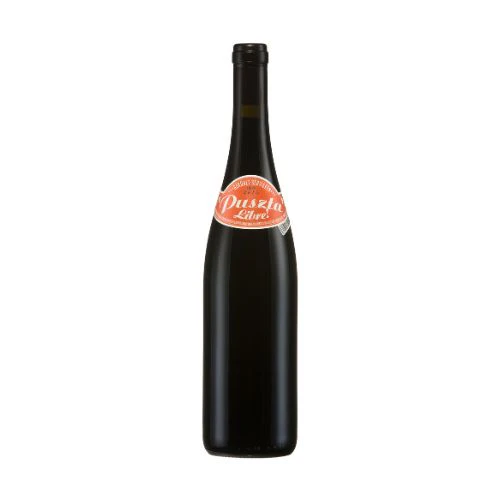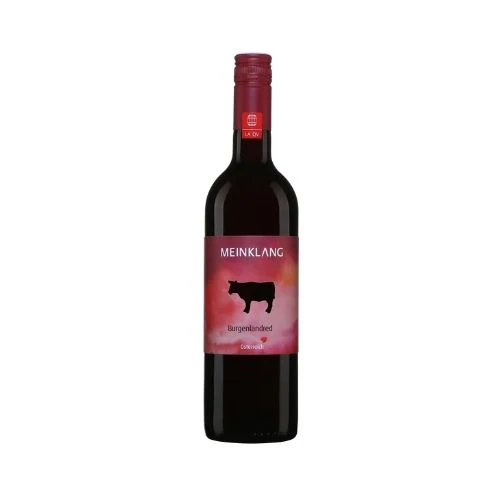
Meinklang - Burgenland Red 2023
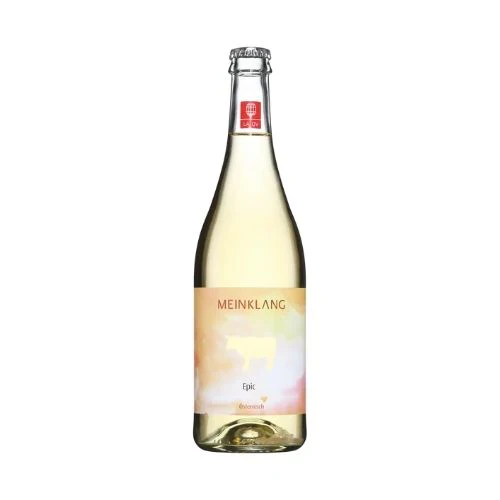
The right way to think about Meinklang is as a family-run farm. It is set in the middle of the World Heritage Site of the National Park Neusiedlersee, on the Eastern side of the Neusiedlersee Lake, bordering directly on the Hungarian lowlands, where life’s diversity and complexity are celebrated
This farm functions much like an organism, relying not only on the people but also on the local herd of cows which contributes in an essential way with their natural and invaluable fertilizer. The farm’s diversity is enriched by ancient grains such as spelt, farro and Einkorn wheat, as well as the fruit orchards and vegetable gardens, meadows of wild herbs and flowers and the elegant charm of the grapevines.
The foundational principle at Meinklang is to treat the vineyard as a biotope, an area that provides a living place for a specific assemblage of plants and animals. Thus the presence of clover and wild herbs around the vines, with deep roots that loosen the dirt around the vines. Competing with them, the herbs stimulate the production of aromas and phenols in the grapes. Naturally, the fields are fertilized with their own compost (manure from the farm), pomace, green waste, and occasionally, rock dust.
Meinklang makes many other choices that are at odds with conventional practice: they plant fruit trees at the centre of every block, as well as black elderberry bushes to feed over 62 species of birds. They also are not afraid to let nature do its thing: they have chosen not to prune their Pinot Gris vines. This leads to an above-average amount of grapes to ripen as very small berries, yielding a harvest which is smaller than usual as a result. The larger skin-to-pulp ratio provides more aromas, extraction, and complexity in the wine. They call this vineyard Graupert, which in the Burgenland dialect is used to describe someone slightly scruffy-looking.
The mineral-rich volcanic soils of the farm are ideal. Basalt and loess weather together with light layers of sand to make fertile soils. They are loose, well-aerated and retain heat–the perfect conditions for grape vines. Through small cracks in the rock, their roots penetrate many metres into the mountain’s interior, absorbing its valuable minerals.
The cellar work complements what happens on the farm. Meinklang allows for natural fermentation and spontaneous malolactic fermentation on its own time frame. No fining is used and little, if any sulphur. Thus, these wines are vegan-friendly. The vinification approach relies more on care than technology: they use gravity flow instead of pumps, and wood, concrete, and stainless vessels.
The use of concrete is of particular interest to Meinklang for maturation because it is porous (stainless steel is not} but less so than wood. In their view, concrete allows the ideal amount of oxygen to reach the wine naturally. They are also innovating with the shape: the concrete eggs in the cellar are built using the golden ratio with no sharp edges to restrain the circulation of the wine. The air passing through the egg’s concrete walls enables the desired polymers to form during the wine’s maturation process. Heavy wine molecules gliding down the inner sides of the oversized egg push the lighter wine molecules in the middle of the egg back up, resulting in a type of circulation.
Product Information
Product Information
Shipping & Returns
Shipping & Returns
Description
The right way to think about Meinklang is as a family-run farm. It is set in the middle of the World Heritage Site of the National Park Neusiedlersee, on the Eastern side of the Neusiedlersee Lake, bordering directly on the Hungarian lowlands, where life’s diversity and complexity are celebrated
This farm functions much like an organism, relying not only on the people but also on the local herd of cows which contributes in an essential way with their natural and invaluable fertilizer. The farm’s diversity is enriched by ancient grains such as spelt, farro and Einkorn wheat, as well as the fruit orchards and vegetable gardens, meadows of wild herbs and flowers and the elegant charm of the grapevines.
The foundational principle at Meinklang is to treat the vineyard as a biotope, an area that provides a living place for a specific assemblage of plants and animals. Thus the presence of clover and wild herbs around the vines, with deep roots that loosen the dirt around the vines. Competing with them, the herbs stimulate the production of aromas and phenols in the grapes. Naturally, the fields are fertilized with their own compost (manure from the farm), pomace, green waste, and occasionally, rock dust.
Meinklang makes many other choices that are at odds with conventional practice: they plant fruit trees at the centre of every block, as well as black elderberry bushes to feed over 62 species of birds. They also are not afraid to let nature do its thing: they have chosen not to prune their Pinot Gris vines. This leads to an above-average amount of grapes to ripen as very small berries, yielding a harvest which is smaller than usual as a result. The larger skin-to-pulp ratio provides more aromas, extraction, and complexity in the wine. They call this vineyard Graupert, which in the Burgenland dialect is used to describe someone slightly scruffy-looking.
The mineral-rich volcanic soils of the farm are ideal. Basalt and loess weather together with light layers of sand to make fertile soils. They are loose, well-aerated and retain heat–the perfect conditions for grape vines. Through small cracks in the rock, their roots penetrate many metres into the mountain’s interior, absorbing its valuable minerals.
The cellar work complements what happens on the farm. Meinklang allows for natural fermentation and spontaneous malolactic fermentation on its own time frame. No fining is used and little, if any sulphur. Thus, these wines are vegan-friendly. The vinification approach relies more on care than technology: they use gravity flow instead of pumps, and wood, concrete, and stainless vessels.
The use of concrete is of particular interest to Meinklang for maturation because it is porous (stainless steel is not} but less so than wood. In their view, concrete allows the ideal amount of oxygen to reach the wine naturally. They are also innovating with the shape: the concrete eggs in the cellar are built using the golden ratio with no sharp edges to restrain the circulation of the wine. The air passing through the egg’s concrete walls enables the desired polymers to form during the wine’s maturation process. Heavy wine molecules gliding down the inner sides of the oversized egg push the lighter wine molecules in the middle of the egg back up, resulting in a type of circulation.