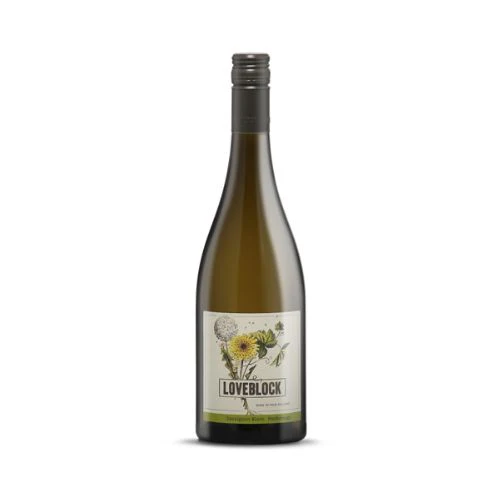
Loveblock - Marlborough Sauvignon Blanc 2022
The wine made by Kim Crawford is not Kim Crawford but Loveblock. With their old label Kim Crawford, Kim and Erica Crawford had won numerous accolades, medals, trophies, and produced many Wine Spectator Top 100 Wines. While cleaning out their house in New Zealand to move in 2015, Kim and Erica Crawford came across a desk pad from the early days of their former wine label. On it they had mapped out their future: Grow the brand, sell it within nine years, and then buy land.
They had done just that: sold their eponymous brand to Constellation Brands and bought land because their non-compete clause prohibited Kim and Erica to participate in any other way in the wine business.
As they could not afford to buy an established vineyard, the folks at Loveblock developed their own, which afforded them an opportunity to make viticultural choices. Loveblock’s Pinot Noir vineyard in Central Otago is SWNZ accredited, which is the Sustainable Winegrowing New Zealand program. The Loveblock Farm, the anchor Estate Vineyard in Marlborough’s Awatere Valley is certified organic by BioGro New Zealand.
These choices percolate through to the winemaking: grapes harvested from organically grown vines vary significantly from those harvested from conventionally or SWNZ grown vines. Organic vines compete with grasses for minerals and water because weeds and grasses are not killed using chemical herbicides. Vigour is naturally curbed, plants are less active at harvest time, and therefore deliver lower yields, around two weeks later than conventionally grown grapes. Moreover, the flavours can be different: for instance, organically-grown Sauvignon Blanc’s profile at harvest is less pungent.
There are other constraints: Organic Certification directs a low intervention regime that rejects using certain compounds routinely used in winemaking. Only organically certified products can be used, including yeasts and fining products
Additionally, sulphur levels (preservative) cannot exceed 100mg/L. Sulphur is used routinely in conventional winemaking as well as SWNZ. In the case of Sauvignon, the addition of sulphur at the harvester under these regimes captures and enhances the aromatics and protects the grapes from the trauma of the picking.
All this means is that the winemaker has a lot less room to manipulate the product, so the wines end up being a more faithful representation of the vineyard. What’s lost in terms of the tool box has to be replaced by attention to detail and patience, allowing the wine to develop at its own pace and do its own thing.
Original: $20.08
-65%$20.08
$7.03Product Information
Product Information
Shipping & Returns
Shipping & Returns
Description
The wine made by Kim Crawford is not Kim Crawford but Loveblock. With their old label Kim Crawford, Kim and Erica Crawford had won numerous accolades, medals, trophies, and produced many Wine Spectator Top 100 Wines. While cleaning out their house in New Zealand to move in 2015, Kim and Erica Crawford came across a desk pad from the early days of their former wine label. On it they had mapped out their future: Grow the brand, sell it within nine years, and then buy land.
They had done just that: sold their eponymous brand to Constellation Brands and bought land because their non-compete clause prohibited Kim and Erica to participate in any other way in the wine business.
As they could not afford to buy an established vineyard, the folks at Loveblock developed their own, which afforded them an opportunity to make viticultural choices. Loveblock’s Pinot Noir vineyard in Central Otago is SWNZ accredited, which is the Sustainable Winegrowing New Zealand program. The Loveblock Farm, the anchor Estate Vineyard in Marlborough’s Awatere Valley is certified organic by BioGro New Zealand.
These choices percolate through to the winemaking: grapes harvested from organically grown vines vary significantly from those harvested from conventionally or SWNZ grown vines. Organic vines compete with grasses for minerals and water because weeds and grasses are not killed using chemical herbicides. Vigour is naturally curbed, plants are less active at harvest time, and therefore deliver lower yields, around two weeks later than conventionally grown grapes. Moreover, the flavours can be different: for instance, organically-grown Sauvignon Blanc’s profile at harvest is less pungent.
There are other constraints: Organic Certification directs a low intervention regime that rejects using certain compounds routinely used in winemaking. Only organically certified products can be used, including yeasts and fining products
Additionally, sulphur levels (preservative) cannot exceed 100mg/L. Sulphur is used routinely in conventional winemaking as well as SWNZ. In the case of Sauvignon, the addition of sulphur at the harvester under these regimes captures and enhances the aromatics and protects the grapes from the trauma of the picking.
All this means is that the winemaker has a lot less room to manipulate the product, so the wines end up being a more faithful representation of the vineyard. What’s lost in terms of the tool box has to be replaced by attention to detail and patience, allowing the wine to develop at its own pace and do its own thing.