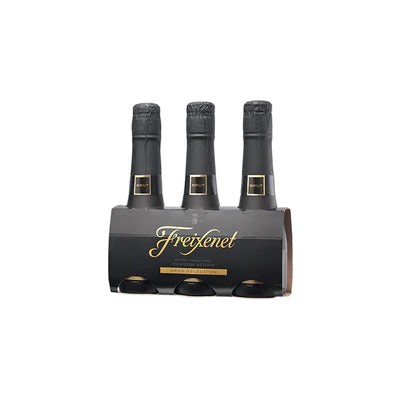
Freixenet - Cordon Negro Cava Brut
The first bottle of Freixenet was released in 1914, the creation of a couple named Pedro Ferrer and Dolores Sala who were both from winemaking families. The Sala family had been making wine at their Casa Sala property since 1861. Pedro’s nickname was “El Freixenet”, named after his family’s ranch “La Freixeneda”, which means ash tree grove in Catalan. Dolores’ keen interest in the winemaking process was easily complemented by Pedro’s business savvy and sense of community.
Their marriage coincided with the arrival of the Phylloxera plague in Spain, which wiped out most of Europe’s vineyards. Far from being deterred, the couple replanted their decimated land with white varietals to make sparkling wine. In 1914, the first bottles were released with Pedro’s childhood nickname on the label. Freixenet had been born.
Freixenet‘s vineyards are in the Penedès, a zone with Mediterranean climate, with sites in the coast, plains, and mountains of this region, which provide ideal growing condition for the grape varieties used for Cava production: Macabeo, Xarello, and Parellada. In addition to working their own land, Freixenet works closely with 500 growers, to ensure consistent agricultural practices. Grapes are picked at the optimal of ripeness, pressed, and then undergo two fermentations. Maturation takes place in architecturally-significant Cavas, built by Joan Torras and Josep Ros in 1923.
Product Information
Product Information
Shipping & Returns
Shipping & Returns
Description
The first bottle of Freixenet was released in 1914, the creation of a couple named Pedro Ferrer and Dolores Sala who were both from winemaking families. The Sala family had been making wine at their Casa Sala property since 1861. Pedro’s nickname was “El Freixenet”, named after his family’s ranch “La Freixeneda”, which means ash tree grove in Catalan. Dolores’ keen interest in the winemaking process was easily complemented by Pedro’s business savvy and sense of community.
Their marriage coincided with the arrival of the Phylloxera plague in Spain, which wiped out most of Europe’s vineyards. Far from being deterred, the couple replanted their decimated land with white varietals to make sparkling wine. In 1914, the first bottles were released with Pedro’s childhood nickname on the label. Freixenet had been born.
Freixenet‘s vineyards are in the Penedès, a zone with Mediterranean climate, with sites in the coast, plains, and mountains of this region, which provide ideal growing condition for the grape varieties used for Cava production: Macabeo, Xarello, and Parellada. In addition to working their own land, Freixenet works closely with 500 growers, to ensure consistent agricultural practices. Grapes are picked at the optimal of ripeness, pressed, and then undergo two fermentations. Maturation takes place in architecturally-significant Cavas, built by Joan Torras and Josep Ros in 1923.