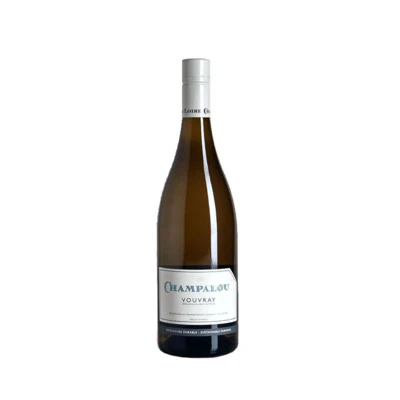
Champalou - Vouvray 2022
Champalou is a family operation: Catherine is the 12th generation of winemakers in Vouvray and Didier is the 6th generation from his side in the Poitou. From the beginning, Catherine and Didier sought to bring their domaine in a direction that was very different from the norms of the appellation at the time: allow the singularity of each terroir express itself through a dedicated cuvée. All this was being done by producing mostly still wines (80%) where sparkling wines were (and are still) the main types of wine produced in the appellation (75%).
Unlike most other growers, Catherine and Didier bottle their whole production. Again, going against the grain, Champalou has always practised a viticulture that is sustainable and shows respect for the land. This is shown in a myriad of ways: vines are pruned short, disbudded, and their leaves are thinned. Additionally, during the Summer, the grapevines are powdered with talc and lime, all of these actions serve to control humidity and thereby avoid mould and diseases. Lots of work with minimal inputs.
Grapes are carefully monitored so that picking takes place at the right time in the individual terroirs. This is particularly important for Chenin where over-ripe fruit weighs down its natural traits.
Vinification is done to express the possibilities of the individual terroirs and the possibilities afforded by the Chenin grape. Accordingly, the grapes are pressed once or twice gently, followed by natural fermentation at low temperature. The terroir determines the path for vinification but the vintage always imparts certain specific characteristics to the wine. Thus, the process is adapted depending on whether the year is lively and mineral or round and sunny.
Time for the third Champalou player to get in the action: Céline graduated with a degree in Viticulture and Oenology in 2003 and left to explore how the craft was practised elsewhere. She visited New Zealand, South Africa, Canada (including the Okanagan), the Médoc, Corsica, and Languedoc-Rousillon. She returned in 2006, just in time for the harvest. And thus the family tradition continues.
Product Information
Product Information
Shipping & Returns
Shipping & Returns
Description
Champalou is a family operation: Catherine is the 12th generation of winemakers in Vouvray and Didier is the 6th generation from his side in the Poitou. From the beginning, Catherine and Didier sought to bring their domaine in a direction that was very different from the norms of the appellation at the time: allow the singularity of each terroir express itself through a dedicated cuvée. All this was being done by producing mostly still wines (80%) where sparkling wines were (and are still) the main types of wine produced in the appellation (75%).
Unlike most other growers, Catherine and Didier bottle their whole production. Again, going against the grain, Champalou has always practised a viticulture that is sustainable and shows respect for the land. This is shown in a myriad of ways: vines are pruned short, disbudded, and their leaves are thinned. Additionally, during the Summer, the grapevines are powdered with talc and lime, all of these actions serve to control humidity and thereby avoid mould and diseases. Lots of work with minimal inputs.
Grapes are carefully monitored so that picking takes place at the right time in the individual terroirs. This is particularly important for Chenin where over-ripe fruit weighs down its natural traits.
Vinification is done to express the possibilities of the individual terroirs and the possibilities afforded by the Chenin grape. Accordingly, the grapes are pressed once or twice gently, followed by natural fermentation at low temperature. The terroir determines the path for vinification but the vintage always imparts certain specific characteristics to the wine. Thus, the process is adapted depending on whether the year is lively and mineral or round and sunny.
Time for the third Champalou player to get in the action: Céline graduated with a degree in Viticulture and Oenology in 2003 and left to explore how the craft was practised elsewhere. She visited New Zealand, South Africa, Canada (including the Okanagan), the Médoc, Corsica, and Languedoc-Rousillon. She returned in 2006, just in time for the harvest. And thus the family tradition continues.